“We love because he first loved us.” (1 John 4:19) — Helping the hurting amid disaster
KFUO Radio’s Andy Bates hosted a discussion on May 17 about the LCMS Disaster Response campaign to raise funds for Camp Courage supplies. Rev. Ross Johnson, director, LCMS Disaster Response; Rev. Michael Meyer, manager, LCMS Disaster Response; Gail Pawlitz, educator and editor; and Leah S. Sieveking, LCMS Mission Advancement talk about the new Camp Courage resources to serve children affected by disaster.
Have you ever been struck by images of disaster so much that you just wanted to hop in your car and lend a helping hand? You may want to rethink that. Here are three reasons why Self-deploying might be more harmful than helpful
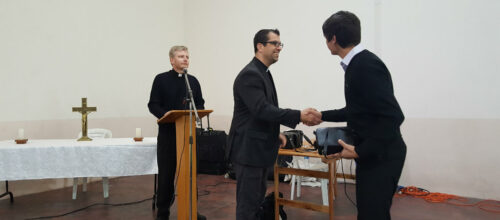
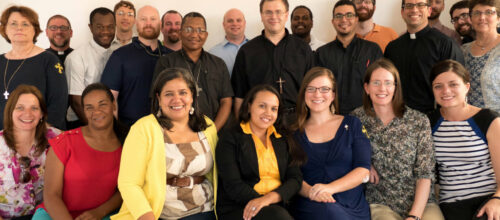
Last week LCMS Disaster Response and Luther Academy led a three day conference in South America for 76 Pastors and Seminarians on how to respond to disasters and minister to people hurting from a wide variety of tragedies.
There are about 14,000 trained volunteers across the United States and about 2,000 more are trained every year. What you might not know is that we train leaders and missionaries around the world to respond mercifully in times of tragedy with the love of Christ.
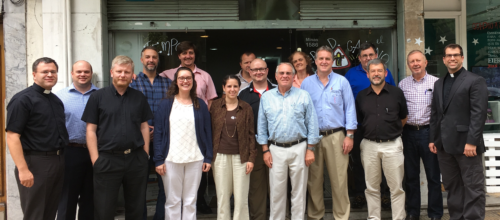
LCMS Disaster Response’s role at the FORO is to be a subject matter expert in the area of Mercy work and giving a merciful response in times of tragedy.
Over the last couple of years we have discovered two needs. The first need is for our materials to be translated into Spanish. Secondly, we have found a need to train our Spanish speaking churches in the United States and throughout Latin America so that they will have Lutheran Early Response Teams (LERT). We also want to do a better job of responding to disasters that strike Spanish speaking communities across the United States.
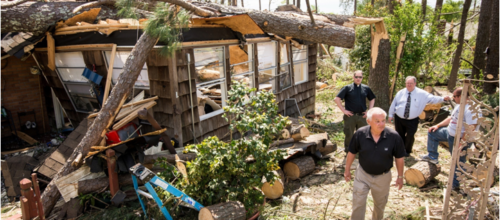
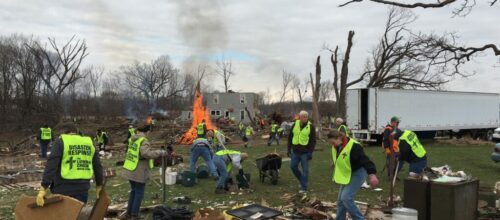
This tornado struck just 3 days after the local LERT training on March 12th. The congregation saw a need, hosted the training and became certified for disaster preparedness. No one knew at the time that they themselves would hear the tornado sirens just a few days later. Because the team was trained beforehand, they knew what to do and responded to their community.
Lutheran Congregational Mercy Work Over the last 15 years there has been a renaissance of congregational mercy work across the congregations in the LCMS. Much of this resurgence was due…
However, for almost two decades there has been an increased reliance on government funding NGOs. Many large faith-based organizations now get well over 50 percent of their annual income from the government funding sources and depend substantially on government budgets, election results, and political parties for funding their social work projects.
On January 29, 2001, President George W. Bush signed an executive order establishing The White House Office of Faith-Based and Community Initiatives (OFBCI). Many non-government organizations (NGOs) including congregations, denominations,…
The fact is that long term rebuilding is difficult and is not glamorous. However, LCMS Disaster Response is committed to helping communities rebuild for up to three years after a disaster has torn apart lives and homes. LCMS congregations are anchors in their community. They serve as a lighthouse of the Gospel and they can be a mercy center for helping others in a time of need.
Families must be able to cope with disaster by preparing and working as a team. Maintaining a ready supply of food, water, hygiene, health items and a few basic tools can go a long way to making sure your family can take care of itself for a few days without outside help.
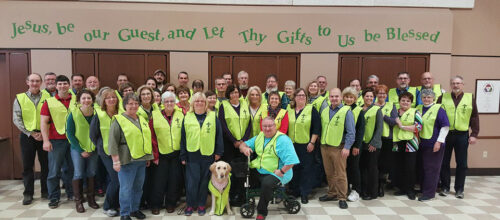
A new class of LERT volunteers from Trinity Lutheran Church in Toledo, OH/Michael Meyer
For almost a decade LCMS Disaster Response has been training Lutheran Early Response Teams (LERT). In fact, there are over 14,000 trained LERT members across the LCMS. I am often asked how we can get a LERT training event at my church and what should I expect during the training.
Even though sending used clothes sounds like the ‘easy’ way to help, gift cards can be an incredibly effective way to give real physical assistance to an individual or a family.
Why do bad things happen? What are Lutherans to believe when everything is in chaos and God feels so very far away? How can we Trust in God’s Love when we don’t understand what is going on around us?